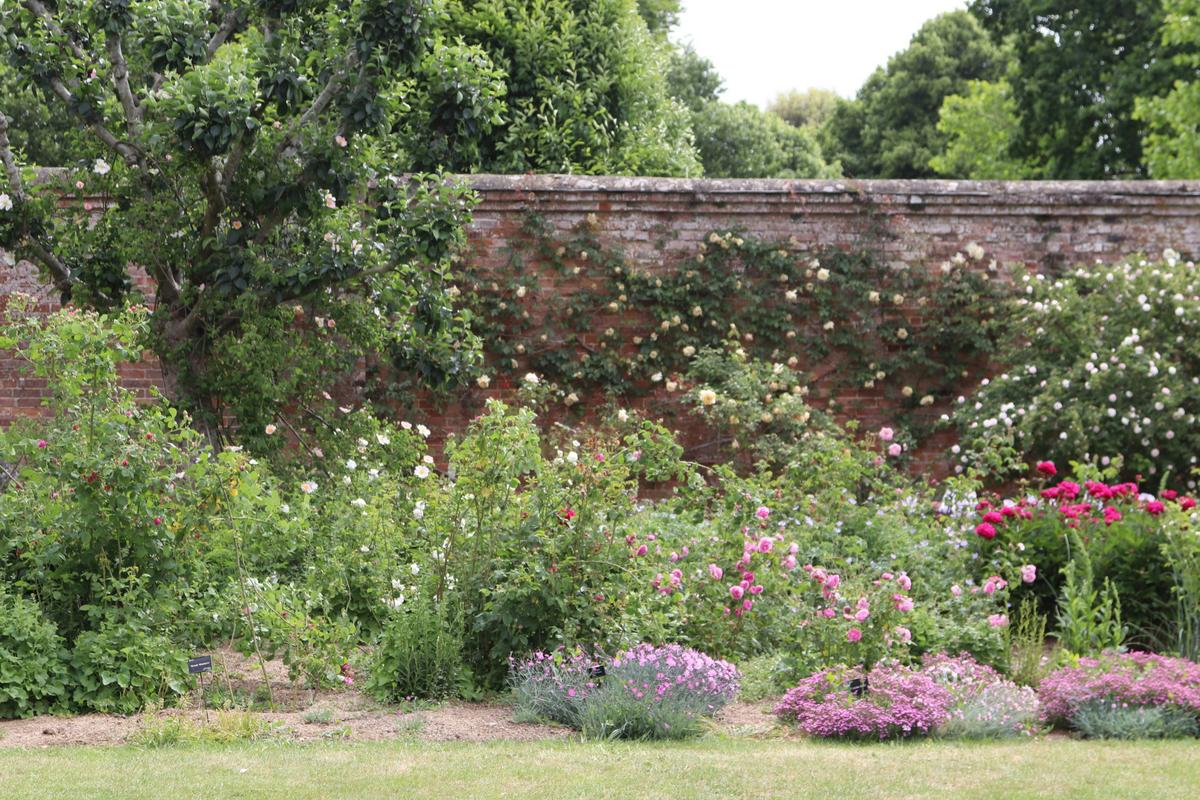
Welcome Words
The street was quieter than Libby expected. 2:00p.m. on a mild and sunlit April afternoon, she’d expect the usual ensemble of older shoppers, pre-school parents killing time before collecting their darlings, clustered teenagers somehow back in the village mid-afternoon and sauntering as if entirely entitled to be there rather than in a classroom ten miles away. And yes, possibly even the odd tourist, albeit Bishops Norland, nestled in off-the-radar Bowland foothills, was hardly on Lonely Planet’s top ten must-see English hotspots.
But today? Let’s see. David Draper, 66, local arable farmer, mucky green overalls and battered cap, heading to the hardware store for some minor kit to patch some minor repair; Angela Arthur and Elaine Harman, chatting, Barbour-clad thirty-something mothers killing time before collecting said darlings; John Dobson, their Priest-In-Charge (name to the contrary, the village was no longer a thriving bishopric). Alex. Alex, the local publican, browsing the bookshop window. Tuesday: The Vaults didn't open till six.
Alex. Her own age. Ish. 37, 38? Refugee from the city. From the madness, as he liked to say, always with that irreverent smile on his face, but Libby had a sneaking suspicion that the craziness had been anything but merry. Small comments he made, throwaway, (have to race ‘em, otherwise the rats win; and that was when I realised I’d never escape earth’s atmosphere alive), but there was an undertow of grit in some of the words, some of his looks, sometimes in his eyes, that told her Bishops Norland was his retreat. She'd never asked. She'd almost asked, but never had, and watching him now as he perused, she wondered why not. Wondered what stopped words already spoken in her mind coming out of her mouth.
His head lifted; almost as if he had heard her thoughts. And then turning, seeing her. He was two hundred yards away, she surely only projected a smile lifting the corners of his mouth; but no mistaking the spreading grin as he crossed the road towards her.
“Beautiful day, isn't it?” he volunteered as he reached her.
“Isn't it? For April.” Such sparkling repartee. What next: aren’t we lucky? Much more stilted and they’d give Ibsen a run for his money. And yet she knew they’d fall into easy conversation as they talked, it was always the case. Always the case, and they’d even manage the segue into spirited banter - and then the exchange would falter, and they’d laugh uncertainly and nod and part ways, and things would move on. Things, never words; never the two of them. Even when the thoughts, the words, the wishes formed in her head; and formed in his, as well, she was sure. The half-sentences, the nearly-touches, the disconnected smiles.
“You will be in this evening?”
She smiled, her full attention back to him. “Bishops Norland plots its poet coup. Hmm. I’ll have to skip the hair washing and the paint drying, but I should manage it.”
His own lip=twitch. “There should be a decent turn out.” And that slight flash of preoccupation. “We still have a lot to agree, and it’s only a few weeks off. And… There just seems to be, I don't know... A little resistance?”
Her own smile flickered. “Not resistance. But a slow and sleepy community? Stashed away in deepest sheep-and-potato rural England? It can take it can take us a little while to get into gear, and we've never done anything like this before.”
“You think I'm a little mad?”
Her smile broadened out, not least given the puppy-dog look accessorising his face. “Heaven help that we’re all a little mad, and that's the way it should be. No, we have a passion, you have a passion. It’s a fantastic thing to do. Something to shake us up, move us forward.”
“If we can call harking back a hundred years going forward.”
“Trust me, one hundred is far better than four. We don’t have a lot of aspic around here, and if anyone really wants to sit in it, they’ll be at a table on their own.” She smiled again, directly into his eyes this time. “We love it. We love what you're doing.” I love what you’re doing. The thought. The words; unsaid.
Unsaid, but his gaze didn't break. “Have you heard from Helena?”
Helena. Such a part of all of this. Crucial. And yet… “No, no. You?”
The smallest shake of the head. “Not for weeks.” His gaze slipped away from her, scanning the street, the neat but haphazard line of shops, alternate bare or whitewashed local stone, the odd Tudorbethan finish, fronts wide and colourfully adorned (and not all of them open, despite the warmth of a spring afternoon). The smooth length of road curving serenely to the right, past the worn-cobbled triangle they affectionately called The Square, with its flower tubs and wooden benches, and the tapered Portland stone of the war memorial. The solid Norman church tower, set back behind its neat graveyard and dark oak lych gate, watching, watching, as it had for 800 years. The upright Georgian facade of The Vaults, newly rendered, stonework patched, green blinds blinking half-open onto the quiet street.
And the school, a higgle piggle collection of odd-matched but handsome buildings, the earliest, part of the original 17th century manor house, weathered grey stone, tilted roofs and narrow windows and an imposing reception hall, and parading through 18th century outbuildings to the solid Victorian redbrick which the local landed gentry had favoured as a show of wealth and modernity, all cosseted by two acres of once-renowned, sometimes-landscaped lawn and gardens. A school of one sort or another, from its sale a hundred years ago by said propertied family until its closure ten years back; standing bereft and purposeless, eyes closed and faces shuttered against the world. And now subject of a redevelopment application, eighteen new homes, apartments and town houses. All neatly fitted into the existing footprint. Including the old hall and most of the gardens.
And Bishops Norland was more than happy with the idea.
Just not the loss of that 17th century hall and the neglected gardens.
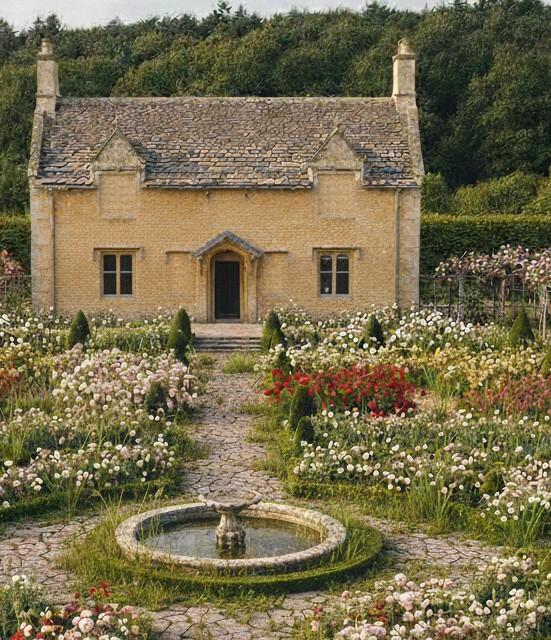
Which the literary plan was designed to counter. The Grand Plan. The Big Idea, that the village had had for so many years, but which Alex had ignited. Alex, the city boy, all fresh and fire and fervour. And that haunt of melancholy.
“Libby?” He was watching her again, she realised, and wiped away the frown she could feel leeching across her face.
“Sorry, miles away.”
“Not too many, I hope, remember you’re due back here by seven.”
“Don’t worry, my flight back from Barbados lands in plenty of time.”
There was no trace of shadow in the answering laugh. “Just make sure your chauffeur is ready and waiting.”
Her own was as genuine. “Oh, Parker always is… Caroline!” and her attention diverted to the quirkily-dressed lady emerging from the bakery beside them, all smiles and scarves and lavender scent. A village stalwart, born, bred, left, returned, a tour de force, and a vocal backer of The Plan. And even as she stopped to join them, Libby’s gaze shifted behind her diminutive form to the sunlit, wandering high street, with its tidy shopfronts and burgeoning flowerpots and natural tranquillity, and wondered why its blessed calm and stillness felt somehow badly offkey.
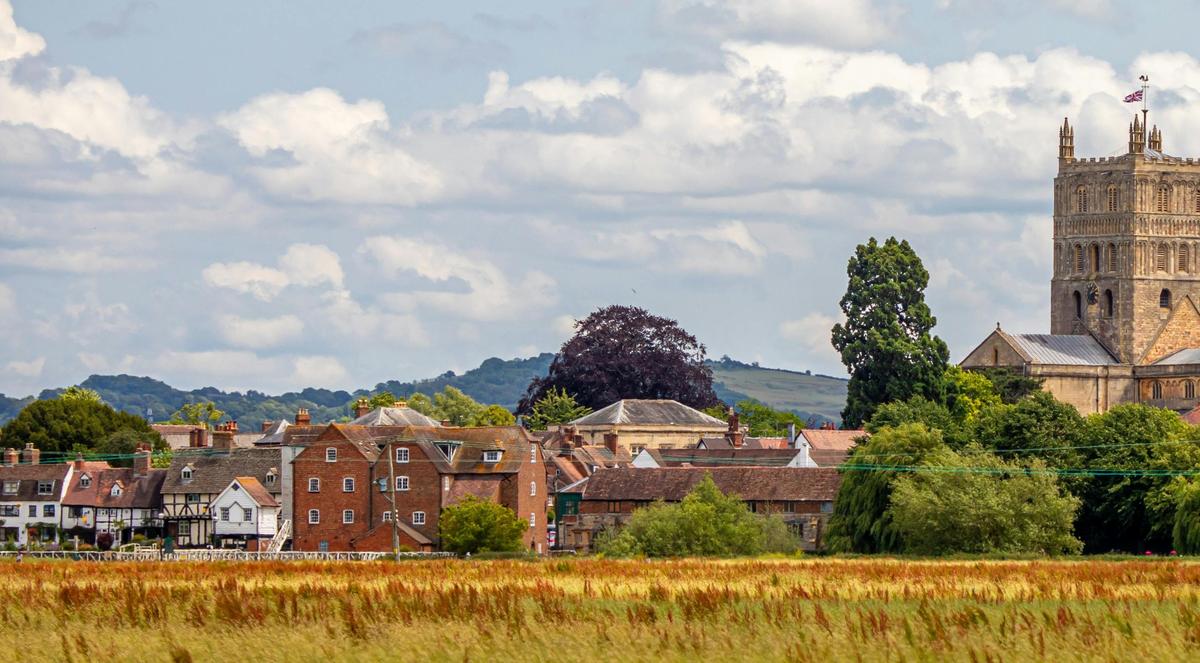
It was hardly still or remotely calm by seven that evening. Bishops Norland: official population 1,891; Libby estimated 1890 of them were in The Vaults this evening. OK, probably two hundred something (maths never was her strong suit, as sundry exasperated teachers had frequently pointed out): imagine how many would fit into the old school hall, if they had their way.
She caught Alex’s eye, and wondered if he was thinking exactly the same.
“We’ve confirmed we can have up to three hundred in the hall,” he was saying, “but we all agree, don’t we, that sort of number, we’d keep for village events. Anything we do externally, like weddings - ” speaking over various herumps and herrahs which ignored the financial logic - “we’ll top at, say, one-fifty. We’ve checked the figures, and that still makes commercial sense, even if they agree to lease us an acre of the land still. What we need at this point is Corletts’ agreement to let us run the event as the pilot. We know they’re at least open to listening, but if we don’t show them how well this can work, how viable this is, it will be thank you and we’re closed. Which none of us wants. So,” and at least the room had settled again, “we need to tie off our key selling points and every last pound of the cashflow projections, and nail who’ll be best in the deputation.”
“And get everything ready by June? It’s already April, Alex, we’ve been going round final budgets and selling points since February, and here we still are.”
He didn't skip. “All by June.”
The Big Idea. Libby reached for her wine, exchanging a glance with Molly as she did so. The Grand Plan. The school had stood empty far too long, such beautiful buildings in the centre of the community. It needed life again. Life; not just another housing conversion, not something that told the world this was just another dormer village. Their beautiful, peaceful, off-the-beaten-track village, established families and newcomers alike (‘newcomer’ being defined as anyone who’d arrived within the past hundred years), not one that had ever wanted to atrophy. And therein lay the conundrum. To thrive, to keep up, to attract, but still be Bishops Norland. They’d cheered Corletts when they’d arrived with their plans; and then realised the loss. Of that stately hall, all bluster and charm and crumbling masonry, and the dishevelled gardens only a handful of them could remember ever being used; but still.
But how to save them with anything sensible? Anything sustainable? Anything a commercial developer would entertain? Greatest destination lure Bishops Norland was npt, for all its beauty and Best Kept awards.
Except it had the hall and the gardens - and a local hero. Lord of the manor material, Miles Dalten, famous (at the time) post-war writer and sometime poet, only surviving son of the family after the depredations of World War One, decorated in Two, successful entrepreneur and active underwriter of the village during some of its hardest times. Generous founder of the school in the 1920s (generous but pragmatic: death duties on his father’s passing were steep and he sold their old home as a boarder for a very tidy sum).
And therein lay the hook. Their local poet. Largely forgotten now… Apart from the poem.
That poem. Written for the school dedication.
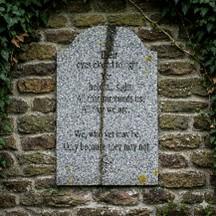
Their eyes closed to light,
Yet hold all sight:
All that surrounds us,
All that we are.
We, who yet may be,
Only because they may not.
Short, but to the nation’s heart, it had caught the zeitgeist of the time, even into the 1950s, before war-weariness and pacificist reaction and his death in ’71 had dulled its allure. Still able, though, to tug at memory, at pathos, at loss and gratitude. Still recognised, still respected, still quoted. Yet penned not for publication, but for the school, and carved into its foundation stone.
They’d all known about it. Of course they had. The little gem inscribed in the very heart of their lives. Hadn't they? Certainly, it seemed so when they came to start talking about it, last year. When Alex arrived. Or was it before Alex arrived? No, they had known. Yes, and they’d discussed it. Hadn't they? They must have done, because she remembered John Dobson telling Alex, last year. October. When they agreed that celebrating the upcoming centenary of their homegrown poem would be the perfect way to (re)establish Bishops Norland as more than just a place on a map, more than just the site of an abandoned school with ‘potential for numerous selected housing units and two acres of development land’. Somewhere to go, somewhere to see, somewhere to celebrate. As long as the commercials made sense.
And it was Alex, Alex their newcomer but hearing all they had to say, who’d suggested the school hall and the gardens as a perfect commemorative (profitable) venue (hadn’t there been celebrations and village fairs there in years gone by? And wasn’t Caroline something horticultural?) - and a centenary event as the perfect pitch to the developers, the perfect illustration of what the space could be. Whether Corletts developed it or the community bought the rights, the collected business brains had worked through figures up, down and sideways, plans, options, proposals. This would simply prove it. And Francine, and her plans, bringing in the up-and-coming chef from her old Liverpool operation, adding the catering, and the restaurant with rooms - if only the permission would come through…
Yes, all of it. They’d known all of it.
Yes, definitely last October. The Big Idea, the Grand Plan, it had always been there, hadn't it?
“Whose idea was this anyway?” Molly whispered into her ear, and Libby felt a smile forming in response. So she wasn't the only one with a dysfunctional memory. Molly, her best friend from school. Not here, of course. Preston. Preston, definitely, as she recalled; but they’d both moved to Bishops Norland some eight years ago, when Molly and Ade had planned the children, and Libby had... Libby had decided that, yes, she wanted the tranquillity, the stillness as well, a freelance web developer can work anywhere, can't she? Yes, that had been her thinking. Good thinking.
Her eyes tracked around the crowded bar, stuffed full of the people she'd come to know over those eight years: the commuter couples; David and assorted other local farmers; John Dobson; Caroline. Tom Owen, their resident GP; Joanna Michaels, book shop owner; Ann and Geoff Bradley who ran the voluntary library; Graham, who coordinated all the local sports clubs; Francine, who’d bought The Stag, their other village pub (how proud they were still to have two), with grand (stalled) plans to add a wine bar and restaurant. Joseph, whose local brewery supplied both pubs and his outlet shop with his specialist Liberation lager.
Joseph. He wanted to buy some land from David. Didn't he? To expand the brewery, and plant some of his own barley. But David had some objections. Didn't he? Was he thinking of growing the barley? Or some other new crop? Or developing the land himself? And wasn't David taking advice from Roger Hume? But wasn’t there was some sort of a conflict of interest? His sister. Yes, Penny, she was the surveyor, and there was suggestion that it was to do with the development, the land backed onto the school grounds, and was she actually impartial? That was it, Libby was sure. Or was it because she was…?
She shook her head slightly, replacing her wine glass, carefully, onto the table. She'd drunk only half, hardly enough to fuddle her brain, but here was her brain, fuddled. She caught Molly glancing, the slightest frown on her face, summoned a smile, and nodded back to Alex and his conversation with Geoff. Alex, standing sturdy behind the dark-stained mahogany bar, his six-foot two frame knocking against the lintel above, relaxed, engaged, impassioned.
The Grand Plan.
Whose idea had it been?
And why did that matter so much?
“You most definitely deserve a pint after all that.”
Now comfortably atop a stool on the customer side of the bar, Alex leaned back and exhaled. The evening was done, the deputation agreed (“Deputation?” Ade had said. “Committee of all works. You do realise what you've bitten off, don't you?”), the next steps divvied up, the last drinks supped, the final banter bantered, the ‘byes’ and ‘see yous’ and ‘take cares’ trailing back through the door as the crowd drifted in their ones and twos into at spring evening turned chillier, David predicting rain tomorrow forecast notwithstanding, and Molly and Ade and Libby had stayed behind to help Alex and barmaid Rowena clear glasses, and then Alex had sent Rowena on her way, and the four of them settled down to dissect the evening.
“I'll do it,” Molly vouchsafed, and as Alex half rose, “don't think I haven't pulled a pint before, Mr Proudfoot.”
“And just squeezing in before closing time,” Adrian observed, nodding towards the elegant wall clock, pointing 10:48.
“Just having a private drink with friends,” Alex retorted. “11:23, folks, pub closed.” He glanced at the handsome construct of cherry wood and brass, and his nose wrinkled. “That thing hasn't wound in weeks, sitting on my list of things to get done.” He sipped, deep and appreciative. “Along with everything else.”
“Like saving the village,” Ade shot back.
“The Big Idea.” Libby sipped lemonade absently.
“It's a good plan,” Molly said. “A Grand Plan. Whoever's idea it was.”.
And Alex and Libby spoke in unison. “Helena’s.”
13th of February. That's where Libby could trace it back to. 13th of February. Ish. Since she had heard from Helena. She remembered it because of the 14th - no, not because that was Valentine's Day, but because she’d had the conversation with Alex. No, not because it was Valentine's Day; and no, not because there was still some small part of her (small?) that wanted that conversation.
No; because 14th of February was the day that Corletts had asked about the dating of the poem and its provenance. Given Dalten was a novelist. And they had both agreed that Helena would definitely know the answer. It was her field. And they had looked at each other, because they weren't actually sure how they knew it was Helena's field. Logically, it was, because it had been Helena who had put them onto it. Had put the village onto it, that Miles Dalten, celebrated writer, poet and hero, had effectively established and endowed the school, carved his famous poem into the stone; and for all that the creep of time had obscured his name, it was a story that resonated still in some shaded part of the collective psyche.
That was the point Helena had made, wasn’t it? When she’d written her piece. Today, In Yesterday’s Words, and posted it… where had she posted it? Medium? Blogger? Substack? Somewhere, yes; she’d shared it with them first, and that’s what had formulated the idea. And oh, such a brilliant one, tying in with everything else; but then they’d needed to know more about Dalten, and the poem, and Libby had a recollection that Joanna and the book shop had something to do with it as well, and they’d agreed they should go and talk to Joanna, and they'd agreed they’d do it the following week, because Alex was busy with the pub until then. Because it was Valentine's.
And his eyes had caught hers, those sad-happy eyes of his, and she had seen him hesitate, seen him on the verge of saying, something. And he hadn't. Well, only to say, yes, let's speak to Joanna next week.
And then they hadn't. And she couldn't remember why.
There were other things, as well.
Henrietta's plan for the farm shop, and the semi-derelict barn that they wanted to develop. They were applying for planning permission. But they hadn't. Yet. Had they?
And Brian. Brian, an accomplished painter, they had hit it off immediately, given that her work involved so much design. Brian; he had approached the Longridge for an exhibition but had heard nothing back. Had he?
And Susanna and Mark. They were getting engaged at Easter, one of those big, open secrets the entire village knew. Probably Susanna as well, but they had all bet that she would act suitably taken aback when he asked. Except she couldn't recall that he had asked. Had he?
And David, and Roger Hume. And Penny. She knew that there was a question mark hanging there – hanging over her. Something to do with an allegation she had accepted a bribe as part of a previous planning application process up near Lancaster which had stymied a counter land application. A claim purportedly disproved, but that had been something to do with farmland as well, hadn’t it, that had eventually gone for housing? Yes, that was why David was hesitating. Wasn't it? Penny was dragging her feet. Wasn’t she? And if she was, why? This time? And who had David and Joe asked for help? Why hadn't they heard?
And, God, bigger things. Bigger things. The problems with the river flooding, again. And the County Council had had their teams out, back in January after the last breach, which had inundated Joseph's outlet shop and encroached onto David’s farm. And wasn't there some complication there as well, something else that was holding up the sale of land?
She stood framed in the timbered picture window that commanded her kitchen-diner, staring absently out across the fields unfurling into the distance. Rippling green, jewelled with emerging spring flowers and a scattering of later daffodils, trees in spectrum shades of greens and silvers, leaves shivering in the breeze. And beyond, the rise of green-brown hills, the low emerald haze that suggested crops beginning to emerge from ploughed clay, the rich, fertile loam that fed so much around them. A patterned sky, playful blue displacing the final shreds of the grey cloud that had brought in David’s promised rain.
Bishops Norland. Her home. Her retreat as well, from the broken marriage and the broken dreams. Her retreat, her solace. And the more soothing still since Alex had arrived. Her good friend; and still nothing more, despite them knowing, knowing that there was.
13th of February. The last time there had been any hint of Helena.
Alex. Alex, and his clock that hadn't wound. Since February.
She picked her mobile off the table, eyes middle distance then dropping, as she swiped open and called up his number.
He answered within three rings; she wondered what he had been doing.
“Alex. I was just thinking. Should we go and see Joanna and ask her about Helena?”

“Do you know, I don't think I was actually here when she was in.” Joanna leaned forward, elbows propped on the counter, chin in hands. “It would have been October, wouldn't it?”
“I think it must have been,” Libby replied. “She’d bought his anthology, and she wrote that piece on yesterday’s words just after. About Miles and the poem in the school.”
“Yes.” Joanna was nodding slowly. “Yes, and she said then, didn’t she? One hundred years this year.”
“And shouldn’t we take the time to listen to what people then would tell us now.” Alex leant back against the reading desk Joanna had positioned so artfully in the nook across from the counter, where anyone was welcome to sit, to leaf through a book or three, to immerse in a novel, to research, to note, to learn; or simply to sit and observe, a drink from the coffee counter outlet Joanna leased by their side, ensconced in the old, bruised leather chair worn into contentment over its many years of service. Another of the quiet havens Libby so loved about the village. “Wasn’t that long after I arrived, was it?”
Libby was nodding now. “Back in the autumn, we were giving you helpful tips and advice on how to run your new establishment, as I recall.”
His laugh rumbled; throaty, Libby supposed they’d call it, gruff. Whichever, she loved to hear it. “There were... one or two suggestions that were useful.” And then, more seriously. “Yes, you showed me the piece and gave me the full chapter on what the Daltens did for the village, not least my esteemed watering hole in good times and bad. In fact - ” He pushed himself away from the desk, long legs striding towards one of the bookshelves opposite them. “Didn't we think that Helena had found one of these?” His hand skimmed lightly across the antique-bound books on the highest shelf, right and then back left, one finger tapping, searching, searching.
“Oo, yes.” Joanna was out from behind the counter now, covering the short distance in moments with Libby at her side, and her fingers marched more confidently, more knowingly than his, and stopped. “It would be one of these... one... of...” And then the fingers tweaked, two volumes, one lying atop the others, brown-aged with a century of use, a century of respect, a century of neglect, handed one to Libby, and began to leaf herself.
The Bishops’ Clarion. An editorial labour of love, a sometime hand-prepared and printed chronicle of village life, loves, events and yes, sheer gossip, which had trundled its way from the 1840s, all spit and Victorian optimism, into the late 1960s, a delightful annal of yesteryear, lovingly bound into decades. And this, The 1920s Clarion.
“Yes!” Libby exclaimed, and then more quietly; conscious of how close Alex was standing, peering over her shoulder at the page she held open. “Yes, see, it's here. See.”
He took the book gently from her, the smallest kiss of his fingers against hers, and read, slowly.
“Today saw the opening of the new Bishop’s Norland School for Girls (boarding and day), part of the Harrison Schools Group and housed in the beautiful Dalten Manor, under the magnanimous auspices of Miles Dalten, only surviving son of Gerard and Theresa Dalten. Following G. Esq’s death, and in view of the changing circumstances facing our most prominent families, M. Esq generously agreed a sale of the Manor to Harrisons, and furthermore, has charitably endowed six Dalten scholarships.
“M. Esq is of course best known for his novels, such as Travesty Towers Above, Hats Off, and the ever-popular Pennington series, and his associations with many of today’s most notable literary and theatrical luminaries, such as Noel Coward and Arnold Bennett. Thrillingly, in honour of this momentous occasion, M. Esq composed a commemorative poem to be inscribed into the specially-commissioned stone plaque inlaid by the entrance to the Manor. More sombre in tone than his prose, it reflects on the great loss this nation has suffered, together with his more personal losses, his brothers Robert and William, cut down in the Great War, his parents tragically departed within months of each other, and the confinement of his sister, Constance, following her unfortunate illness.”
“Of course, and we’d never appreciated he was a poet.” Joanna interjected.
“Or that the poem had taken off the way it did.” Libby supplied. “That it went national.”
“A hundred years ago.“
“Yes, and...” Joanna paused again, hand resting on the volume she had retained. “But I think Helena believed there was more. She kept going through this as well.” She extended it slowly, and it was Alex who took it from her.
“Great Families of Lancashire,” he read slowly, opening it and flicking idly; and then his eyes came up to glance between the pair of them. Puzzled eyes. “Which doesn’t seem to say much more than we know, family been here since the 17th century, originally from Shropshire, granted the estate by George the Third for services rendered, superlative landlords – of course – assorted JPs, couple of local MPs et cetera et cetera, sons Robert and William killed in World War One, Miles a successful writer and continued major benefactor during, quote, difficult economic conditions. There’s a couple of pictures, though. Here - ” Libby and Joanna leaned in, Libby angling the pages so that the glare from the coated one hundred-year-old pages didn’t obscure the old prints. Four of them.
The Dalten family gathered for a formal shot on steps opening down into the garden from French windows Libby recalled were at the back of the house. A summer shot, from their garb, Gerard Dalten, stiff and starched despite a pale serge suite; the three sons, a range of willowy teenagers, in light flannels, Theresa, resplendent in sweeping Edwardian lace and ruffles,, Constance, still pigtailed, in pin-tucked smock dress. Libby tilted it again to read the inscription: Gerard and Theresa Dalten and their children, l-r William, Robert, Miles and Constance, at home, 3rd August, 1911, on the occasion of the annual Garden Party.
The family again, this time in heavier garb, an unposed shot, clearly outside the church, and clearly in conversation with some shadowy figures at the left of the photograph. At least, Gerard and Theresa were conversing, Robert and William standing watching, Miles and Constance with heads bent towards each other in their own private exchange: The Family at St. Dunstans for the traditional Harvest Festival Service, October 1913.
The third. Remembrance Day 1921, at the foot of the newly-begun war memorial. Heads bowed at the front of the assembled villagers: Proud but grieving parents Gerard and Theresa; youngest son, Miles, coming novelist for this new decade; Constance, her last public engagement before her sojourn at The Yorkshire Retreat.
And the final one, June 1930. Another village gathering, this in the school gardens. Still; the custom had endured, a group of dancers to the foreground, figures blurred as they moved. Miles and Constance, and unposed again, picture left, next to the manor house doorway. Miles Dalten, celebrated poet and novelist, and his sister, Constance, on the occasion of the mid-summer fair.
“God, they were quite tragic, weren’t they?” Joanna leaned out from the book. “The parents died as well, didn’t they?”
Libby nodded. “Such a waste. And Constance. She spent pretty much nine years on her ‘retreat’.” Her finger reached to touch the harvest festival photograph. “Poor bloody Daltens.”
“Explains the poem, doesn’t it?” Sombre, Alex closed the book. “As if it needed that.”
“I know. But…” She halted, eyes still on that far distant family eternalised in starkest black and white. “But we know all that already, it wouldn’t tell Helena anything new.”
Joanna was shaking her head. “No, I know. Except...” And then she moved back towards the counter, the look of a schoolteacher in search of corroborating evidence.
“Joanna?”
“I wasn't here...” She was back at the counter now, tapping her laptop back into life, mousing through, and reaching for the old-fashioned desk diaries that she still kept (never rely solely on technology, she liked to say, the written word is written). Libby and Alex followed, squinting at the page she had open, her finger tapping absently. 6th October last year, with an indecipherable note in the spider crawl of Max, her teenage Saturday assistant.
“Joanna?” It was Alex this time.
Joanna's attention shifted from the diary to the couple in front of her, expression midway between frown and smile. “That one - ” and she pointed to the slim volume still in Alex’s grip, “She asked us to see if we could order it in, the one we had was from 1922, she was after a 1930s version. Took me a while, but we found it.”
“When did she come back in to look at it?”
But Joanna was shaking her head. “No, I don't think she ever has.” The frown bested the smile. “I think it only arrived just before Christmas, it took some tracking down, and January can be a bit of a mess, getting straight after the Christmas rush…” The smile returned, this time sheepish. “I don't think we've ever let her know.”
“At least not before 14th February,” Libby supplied.
“14th February?” It was Alex, his voice and look were sharp.
Libby felt the twitch of her own smile. “No, not that. It's just, that's the day, don't you think? Where everything seems to have stopped.”
“Stopped?”
“Anything going forward. Yes, we're still living, we're still going day-to-day, but that’s all we’re doing. Nothing’s changing, nothing’s moving. Nothing’s happening.”
“Frankie’s restaurant,” Joanna reflected. “Joe’s brewery. The farm shop. God, Corletts, even.”
And Alex was nodding. Libby kept her gaze fixed on his face, seeing him processing, just as she had. Watching him connect; they had stopped too. His eyes touched hers, and she saw the thoughts echoing. The same thought.
“My clock.” He looked down again at Great Families, still lodged in his hand. “What was she looking for? What is it that she thinks is in here?”
“Something we’re missing.” Libby stretched for the slender tome, felt in its warm leather the softest brush of lives lived, of love and loss and hope, dejection and rebirth. She opened it; it wasn't stiff with age as she’d expected, pages brittle scented with must, but supple still. Fluid, she thought, like time, like history. As their lives should be. She looked up, into Alex’s direct gaze. “I think we need to read it and figure that out.” Her eyes turned to Joanna. “And we need to let Helena know that it’s here.”
Her friend was nodding, but it was hardly a nod suggesting action. Hesitation, uncertainty, misgiving, yes, as she picked up her pen and tapped it idly against the diary page. “The thing is, I’m not sure I know how.”

The clouds were gun-metal again today, squat on the horizon, stifling any brazen attempt by the April sun to penetrate and bludgeoning any hint of colour. Even the serried flower tubs so neatly planted by the city council workers looked jaded and bedraggled under the leaden weight. So very regimented, she often thought, drilled into place by dispassionate horticultural sergeant majors. Pretty, yes, cheerful, yes, uplifting, yes, but still somehow contrived. And today, as she peered through office windows smeared with the beginnings of rain, decidedly grey.
Not a bad metaphor for how she felt.
Helena shook herself. Enough of this. She’d been moping for too long. Grey, dismal Monday? All the better when tomorrow dawned bright and clear. Enough rain to make Noah nervous? All the better to keep those flowers perky once it cleared. Fine, if reality today was dank and grey, in no time at all it would be bright and colour-packed. Stop with the maudlin.
She looked around the office, her companions engrossed in their screens or buried in conversation, on the phone, on a Teams call, with a colleague. Good people, she liked them - well, most of them - she enjoyed time with them… actually, no, enjoyed was a little excessive, and she tried always to be very precise with her words.
Too precise. Too exact; too taken with them. Too obsessed. Because words were just words. A means of communicating information, imparting an idea. Discussion, debate, yes, they required words as well, and yes, when it came to those conversations, they needed to be chosen carefully. How many suggestions and opinions and nuggets of wisdom had she heard poorly presented and duly ditched or diluted, or worse, duly causing offence. No, words were important.
At least in reality. In the real world. Not spinning stories that distracted her from the business of that reality, from her hotshot banking career, from the path that life and expectation had laid out for her. Expectation and obligation. Parents, siblings, teachers. University; bank number one; bigger bank number two and up the career ladder; prestigious bank number three, further still. And Patrick. Patrick, exactly as she should want. Patrick, exactly as he wanted her to be, his fiancée, that ambitious, level-headed career girl, not drenched in words as rain drenched the blue-grey anemones struggling to smile in their pots across the road. As they’d discussed he proposed on Valentine's Day.
Discussed; not the precise word; and not ‘they’, either. Patrick, so enthused about their life together, everything he could see, everything he could hope, with his beautiful, funny, kind and sexy Helena by his side, friend, partner, lover. Their talented careers, hers in high-flying finance, his in civil engineering, what they could achieve, where they’d travel, what they’d see, where they’d live, how that would grow, for the children they’d raise.
She’d do something positive. Venues. She could look at venues, couldn't she? Because she had accepted him, of course she had, following the perfect ribbon of her life. Exactly as she wanted, exactly as her head told her whenever she had the sense to listen. Venues. To start – no, to continue their perfect, planned, professionals-par-excellence-pillars-of lives together. And what time would that leave for her little scribblings? As he liked to call them. Affectionately, yes, indulgently, a harmless hobby. But not reality. “I love that you do it, Hels, that you see stories anywhere and everywhere, but reality is just as good a ride. Don’t you think?”
Of course she did.
Except.
Funnily, it was two days later that she managed to look. Lunchtime, in fact, after a tedious morning of compliance presentations, a sandwich balanced to one side, on hand for absentminded mouthfuls. She flicked into the Internet. Venues. Well then. She knew she wanted something that wasn't city. Hardly a country girl born and bred, but it was in nature, outside the bounds of urban life, that she felt most at peace. There: and buried in words, her own, yes, but not exclusively. Anyone’s. Anyone who cast and spun and juggled, plotted and twisted, ensnared and engrossed.
So. A nice, big, country house, yes, that would be perfect. She started to type, and was it the Internet remembering her previous searches, or did she actually enter the name of the village herself? Abbots Stokeley. And there, the obligatory Wikipedia summary: Abbots Stokeley, village in Lancashire, population 1891. Her hand hovered. She should be looking at suitable venues, not some arbitrary village she’d discovered out driving aimlessly one day. On her own, time out, after another dispiriting conversation with her parents. Conversation? No, let’s be exact again - lecture, dissertation assassination, even if delivered with her mother’s breathless affection and her father’s jocular concern. What a perfect life she had, but really, darling, don’t you think you should put your shoulder into getting that promotion, especially as it’s certain your lovely Patrick will pop the question and then there’ll be children, won’t there, and we do love that you still write those little stories of yours, but darling, real life, real life.
Reality.
So. Wedding venues. Yes.
She clicked, and the images leapt onto the screen in front of her.
“I've been thinking.” Joanna swilled her G&T contemplatively. “And no smart comments.”
“Not my forte,” Alex returned. “But go on.”
Joanna spared a moment for sip. “When Helena was here, Max said she had her laptop with her. She was very taken with the people, anything in the old newspapers or archives, any little detail, local families, local places. Seems the two of them spent a little time working on it together.” She took a sip of G&T. “Good thing schmoozing customers is one of the things I pay him for. Anyhow, that’s apparently when she was looking for the revised Great Families, and that's when they decided that she'd order it. And I think that’s when she said that she was in the words business as well. So… I wondered if we put those two things together, her laptop and this book, if that’s how we find her.”
Libby’s eyes snagged Alex’s. “And I know the web. Search engine optimisation.”
His gaze roved the near-empty pub. “In the words business.” And over at the antique clock, hands stilled at 10:48. “Do you think that’s somehow important to all of us?”
Abbots Stokeley. The neat row of independent shops, the not-quite square, the towered church and its intriguing graveyard; the school.
The poet and author. Local chap. Who’d endowed the school on its foundation; she’d read as much as she peeked through the locked gates at the dedication stone set into the wall. She remembered that, and she remembered walking the churchyard. And the book shop. She remembered the book shop. With its reading nook and its coffee bar, and the young girl with pink-streaked hair telling her she could stay as long as she wanted, and would she like a drink, and just browse anything she fancied. It had rained then, as well, the sky ashen, the equally tidy flowers flinching under the drops, just far more prettily than in town.
And as it had rained, and as customers had ebbed and flowed, and Maxine had kept her mug topped up, she had delved. All history was after all a story, and what was it that set her world on fire? And here, here, she knew there was a story. Matthew Halton, the local poet. The school, founded near a hundred years ago. His old family home; his family old money, old gentry (did we still call them squires back in the 1920s?). The dedication on the stone.
He had been terribly famous, terribly fashionable in his time. Matthew Halton, his works brighter than the justifiably dark writings of others whose names had endured, resisting all but a dusting of melancholy, recognising a mood - a want - the need for some light, some joy, for distraction, a renewal of faith. Fashionable; and commercially successful with it, too, working family connections and society introductions, his short stories everywhere from magazines to early BBC radio, his novellas ubiquitous. His profits invested carefully, diversified and prudent and in rising consumer businesses, he even proved canny enough to avoid the ravages of The Crash. Yet it was all of its time, travelling poorly beyond the 1940s, his words slipping into insignificance, and although the village remained proud of him, that was, these days, where it began and ended.
And the family. A tragic family, in a not uncommon way. Eldest son, Richard, killed at first Ypres, second son, Walter, died of wounds sustained at Lys. Daughter, Charlotte, floored by the Spanish ‘flu at 17, with lingering after-effects which seemed to twist her personality sour; encephalitis, they believed; turned headstrong, unruly, dangerous even, and moved to a ‘private retreat’ a hundred miles away. Only Matthew, and thank God for Matthew, living the life of his two brothers as well as his own, and staying close, still, if accounts were accurate, to his dispossessed sister.
Matthew, with his commercial acumen and investment sense and reading the runes of looming taxation and decline. Matthew, who sold the rambling and expensive family home as the perfect spot for a boarding school, and more, endowed it with several thousands of his own funds, five scholarships, one each for his brothers and parents, and for stashed-away, out-of-sight Charlotte.
Abbots Stokely. Not exactly down the road, but not a million miles away. And the book, she'd ordered the book, the revised edition. They'd never come back. She had never followed up. And not, as she would like to pretend, that she had forgotten; but because that was what was expected.
Except it wasn't what she expected. And the date, 22nd of June. Wouldn't she like to know the answer before the centenary? Wouldn't that be something to write about?
They were silent as they walked. Companionable, amiable, in step, close together. Not touching. Silent, each in their own reverie.
It was Libby who broke it. “In the words business.”
Alex’s pace slowed, and he part-turned to her. “Journalist?”
“Which would explain her penchant for research.”
“Has she ever mentioned it?”
Had she? Could she remember Helena ever talking about it? About herself, what she did, as a living, with her time, with her life. Helena. And the unsettling notion that she couldn’t quite call her face to mind. She shook her head slowly. “No.”
“What does she do?”
The echo of her own thoughts stopped her. Quite literally. “I don't know...”
He had halted too, facing her now, expression intent. “Libby, have you ever met her?”
Of course. “Of course…” Her eyes drifted: the neat row of independent shops, the not-quite square, their fine old church, the school. Helena’s face... There! Soft features, blue-green-brown-eyes, enigmatic smile, mid-cut, mid-colour hair, soft again. Soft. Soft focus. “Yes...” and her eyes came back to his. “I must have.” Yet even as she spoke, she was shaking her head. “Mustn’t I?”
He stepped in towards her, his hand almost reaching. And stopped. “Tell me about it.”
Yes. Tell him. The last time she’d seen Helena. What – October? When she’d been at the book shop? Yes, she’d have… no; no, Libby had been out, with Brian, she thought, he was sketching and he’d wanted her opinion. Well, June, then, definitely, because they’d met and talked, about the Daltens, about the house, about the village, about… about…
Hadn’t they?
Helena.
She looked back to Alex, by her side and still removed. Soft focus into hard focus, nodding, slowly, deliberately. “Yes. I know.”
“But…” She swallowed. The street, the church, the school, the village; all so familiar, so sharp and alive… and blurring now, as she blinked. Soft focus. Like Helena. Who knew them all and none of them could ever properly recall.
“But we always know. Don't we? That she's been here. That she's thinking about us. About what we do. What we need.” His hand grazed hers lightly; and fell away. “What we want.”
Helena. So very real. So very unreal. “Alex...” Just as he was. As she was.
“And nothing has moved since we last heard from her.”
She breathed deep. “The 13th of February.”
The smallest smile played across his face. She wanted so very much to put her hand to his cheek and run her fingers to meet it; and knew, as she’d known for weeks now, that it wouldn’t obey her command. Nothing changing, nothing moving. Nothing happening. She saw that he saw it, saw his body move as if towards hers, and stop. “Because she’s not telling us what to do.” Saw his hand raise, too, and fall back. “She's stopped writing us.”
It was raining; again, puddles rippling as she pulled to a stop in the near-empty public car park. Still, April showers, and yes, there across the way, tufting foxgloves, budding bluebell spires, obligingly sprightly daffodils, growing casually where they would rather than regimented to city diktat. And yes, that was a sliver of sunshine along the ink-stained horizon. She found she was smiling as she clambered from the car, albeit raincoat clutched tight against her.
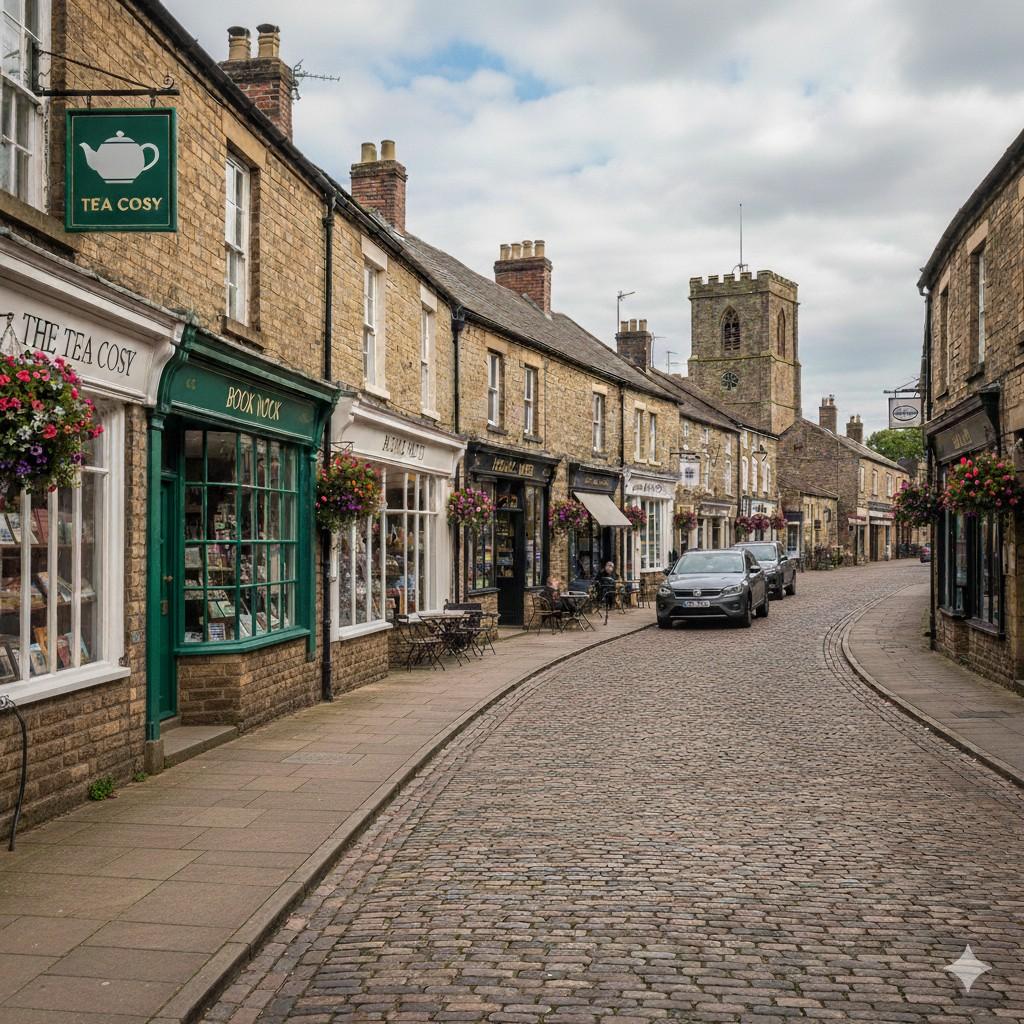
The village was much as she remembered it. Although not quite as had written it: details tweaked to protect the innocent. Changed the gentle meander of the road from right to left, placed the cafe where the delicatessen lived, given The Vines a Georgian facade, changed The Hind to a 19th century coaching inn rather than non-descript end terrace it occupied.
But the school? The school: exactly as she remembered, exactly as she had written. And it was to the school that she walked first, nodding vague smiles to the fellow hardy (if damp) souls braving the elements (ok, strolling through clearing drizzle).
They'd made progress, she saw as she approached. Some of the older windows, rotting she’d suspected, had been replaced, the ivy and lichens that had started to attack the stone cleared away, the driveway and courtyard similarly, two mini JCBs tucked out of sight against the main house, and sturdy gates padlocked shut, a strong, modern lock twisted securely beneath the sign proclaiming ‘Bremner Developments, Proud to be a Considerate Contractor, all inquiries to…’
But she could still see the stone. She read again slowly:
Their eyes closed to light,
Yet hold all sight:
All that surrounds us,
All that we are.
We, who yet may be,
Only because they may not.
Beautiful, still. And tailored. To the size of the stone? Or the size of the implication.
The book shop. Next, she needed the book shop. In Bishops Norland, it was on the south side of the high street, next to the bakers. In Abbots Stokeley, it was on the north, next to the chemist, but she’d left both of them sharing the cafe connection; and the same stippled front window and a cerulean-blue stable door with an old-fashioned bell inside. An old-fashioned bell which tinkled agreeably as she entered, and the teenage girl, hair now blue, behind the counter looked up with a welcoming smile.
There were two customers in front of her, and so she mooched, just as she had last time, browsing the history shelves, the biographies, the travel, and surreptitiously eying the tables adorned with the latest releases: two new thrillers from A-list writers, a scattering of romances, three wellbeing manuals, a collection of English summer lore and folk tales, and one promoting a local author: she liked that, she'd buy a copy before she left.
Stifling the thought that perhaps, maybe, with luck and a black cat in Virgo during a blue moon, maybe she’d be on display as well. Someday.
Then to the ‘Local’ section. The Bishops’ Clarion. Her eyes scanned; but no, Great Families of Lancashire wasn’t there. Well, that was good, maybe they’d pulled it to one side as they’d ordered in the reprint. Her fingers tapped the shelf, a rhythmic morse-code beat; she felt someone’s eyes on her, and turning, met the amused and not unfriendly inspection of the greying and bespectacled fifty-something gentleman installed in the reading nook. She strained to work out the cover of his book as she half-smiled in return. An Idiots Guide to All Things Woollen. Her lips quirked. Each to their own, and the world of words was infinite.
The counter was free now, she saw, and as she approached, Maxine offered the encouraging smile again, accompanied by a friendly “How can I help?”
“There was a book I ordered last time I was here... I'm not sure if it's come in yet? It’s a reprint. Great Families of Lancashire. From 1932.”
“But how does fiction possibly cross into reality?” he asked. What was it Libby could see in his eyes? Doubt, uncertainty, disbelief; hope.
“But reality crossed into fiction.” She touched his hand lightly; very lightly, and only for a moment. “How does any coincidence, any magic, any wonder possibly happen? And Helena cares about us, we know that, look at what she’s done, what she’s given us. Whatever it is that’s taken her away from us, taken us away from her, I’m convinced that won't have made her happy.” She moved as if to take his hand; and stopped; the invisible brake. “If words can transport us from our everyday to places we're happy to be, places maybe we'd even rather be, isn’t that a form of magic? Why can’t they be powerful enough to reach the people we love, wherever they are. Whatever separates us, reality or not.”
What precise adjective would she use to describe the morph of Maxine’s smile? Mysterious, quizzical, bewildered, attentive, reserved? She knew books could be transformative, but surely not across so great a range - and surely not for someone who worked with them all the time.
We did get it, she was saying, “but actually only this week. It was a little hard to track down, but Martin, he’s the boss, he managed it somehow, used his network, put word out. It's come from another book shop, I think, not somewhere I recognise. But they sent a note with it.”
“A note?” Well, that’s Martin’s business, surely, not mine. But Maxine was rummaging beneath the counter, and within a few moments, extracted Great Families and placed it on the wooden expanse between them. A slim volume, its weathered leather protected by a thin plastic wallet, and with the slightest strip of white paper peeping from its cover. The note. “Well, thank you, but I'm sure that must be for Martin - ”
“No, but you see, the note is actually addressed to ‘the lady buying this book’. So that must be you.”
That must be you. Her breath checked. Must it? Who else knew that she’d ordered it? She’d told no-one, not even Patrick. Fear, perhaps? Of what he might say, and where that might lead?
‘Ms Baines?’
She refocused; on Maxine, curiosity writ wide, and on the innocuous laminate-clad volume resting between them. She made sure to paste a neutral smile on her face as she reached for it, lifting it warily, holding it as if it might shatter in her hand.
Connection. She felt it. Connection, life, energy, promise. The words flooded, just as words so often did, no matter that sense and practicality so frequently counselled her to dam them.
And the small slip of white. She flicked her smile back to Maxine, and then tweaked it. Just the smallest amount, just to see.
‘To our dear friend, Helana.’
“God…”
She wasn’t aware the word had formed aloud until Maxine’s “All ok?” registered.
Our dear friend. “Oh, yes, all fine.” Goodness, how convincingly breezy she sounded. “All fine.”
“So it makes sense?” The unadulterated intrigue in Maxine’s face provoked an automatic giggle. She welcomed the touch down to reality.
Reality? Which ride was this? “Well, I think so, yes. I’m just going to sit and read…’ and she turned, deliberately, book and breath clasped firmly to her.
“Would you like a coffee?”
“No, not today.” She hardly turned back. “But thank you,” continuing to the reading nook, nodding to the grey-peppered gent still perusing the hidden world of woollies, and sat, slow, composed. Placed her bag carefully on the chair beside her. Eased Families from its sheath and caressed the gnarled leather, fingers tracing the gilt-inlaid title. Opened the cover slowly, and closed her eyes. Briefly. Gathering strength or gathering disbelief. And read.
And read again, aware of salt-and-pepper glancing her way inquisitively.
‘To our dear friend Helena... From all of Bishops Norland.’

It had finally stopped raining by the time she left the shop, Families stashed safely in the shelter of her bag along with the local author’s book (a poetry anthology, she thought that was very apt) - she didn’t trust the leaden heavens not to bestow another soaking, even on the short distance to the church.
Heavens. Hmm. That would surely be appropriate in a graveyard; her lips quirked as she pushed open the lych gate. At least she knew where she was going, she’d found the grave back in October. And at least there was pathway most of the way there; as you’d expect, on the approach to the memorials of the local squires.
The main tomb was splendidly late Victorian, a six foot tall stone vault, weathered grey and moss-covered now, two imposing angels at either axis, and a rollcall of 19th century Haltons inscribed upon the sides; together with that single 20th century addition: Richard Dysart Halton, 2nd July 1916, “Cut down before youth had faded, and buried with his fallen comrades in that far-off foreign field”.
And the 20th century single stones beside it. The stark white, round-shouldered rectangle of Walter Miles Halton, 11th Lancashire Fusiliers, 23rd July 1918. George Dysart Halton, treasured son and father, d. 1st May 1925, beloved wife Daphne, d.11th November 1924. Charlotte Jane, d. 19th June 1942. And Matthew, of course, Matthew. Matthew James, beloved son, writer, wit and philanthropist, d. 15th September 1971.
Charlotte Jane, only daughter of George and Daphne. 19th June 1942, aged just 41. Daughter; and beloved sister. And the lines Miles had had inscribed for her:
Forever in my heart, gratitude unbounded by words, your devoted brother Michael.
Miles Dalten, celebrated poet and novelist, and his sister, Constance, on the occasion of the mid-summer fair.
Miles and Constance, unposed, picture left, next to the manor house doorway. Turned towards it, her hand against the poetry stone, his on her shoulder. No rudimentary photography, no flow of time and memory could blot the native affection their figures displayed.
It was turning dusk by the time she left the village, driving slowly, slowly past the school for a last glance through the gates, raising her hand in apology to the driver behind her; was he wondering if she was considering a purchase? Or just some passing busybody.
Following the road round to the left and heading west and home, she dropped the visor against luminous shafts of late sunshine stripping through the lumbering clouds.
And smiled.
She smiled, shading her eyes against the late shafts of sun skirting the last of the day’s rainclouds.
And realised Alex was watching her intently. “Penny for them?”
“Tenner these days, surely.” She shifted on the bench they’d chosen, in the almost-Square facing the school. “And hardly worth that, either.”
“Inflation aside, you looked a long way away from here.”
“Maybe I was.” Her gaze moved to his. “I was thinking about Helena’s world, imagining. Wherever that is.”
“Here.” His voice was soft, his own gaze roving the tranquil square, the meandering road, the closeknit buildings, then settling back to her. “Wherever she is, I think she lives both.”
She smiled again, quietly, absorbing the scene herself, neat street, the cobbled triangle, war memorial standing stark and proud. Their sentinel church, and lynchpin Dalten House. And then her eyes dropped, to the space between them, their hands resting on the bench, fingertip close; and no more. “Do you think she got the message?”
His hand edged closer to hers. “Yes.”
It rained; again. Of course it did, on the day of their appointment, despite the fact that it was June.
“Because it’s June,” Patrick corrected, as he deftly manoeuvred her around another puddle. ‘De rigueur English summer. That’s why I think we should get married in November. Bound to be glorious.”
She shoved him, hard, and laughed as he exaggerated a stumble into self-same puddle. “Berk.” But she slipped her arm back through his as they made towards The Vines. “A soggy June will give people the perfect excuse to purchase a designer umbrella.”
“They’re a thing?” His expression was the combination of innocence and cheek that she loved; one of the many that she loved.
“In my circle, yes, sweetie. Your uncouth bunch, I can’t comment.”
“I’ll send a memo.” He stopped abruptly, to drop a kiss onto her hair. “I’m glad you dug in and brought me here, Hels.”
Her eyes drifted back to the school… no, the development, and moving apace now: The Girls’ School, Abbots Stokeley. “1- 2- and 3- bed homes; character licenced venue with rooms; new community store.” The homes a mix of apartments in the old boarding areas, the houses and bungalows converted outbuildings, the venue and rooms in the old hall wing of the Halton family’s proud Victorian pile. And the venue and the store supplied and run by the local Abbots Stokeley businesses.
“Sometimes, I know a thing or two. And June next year will give them a chance to finish it. I’m not getting married on a building site, even for you.”
He laughed; throaty, they called it, gruff; she loved it. “And they say romance is the wrong side of the grass.”
“Just living dangerously.” Her eyes wandered again, this time further along the street, to the sturdy church tower. “Speaking of, can I show you?”
His gaze followed hers. “Charlotte Jane?” And now his tone was serious. “Yes, please.”
It was a resounding success. Of course it was, and even the weather played as it should, cloudless sky, warm but not hot enough to wilt the horses, the lightest caress of breeze. The village decked in early summer flowers, bunting and heraldic banners (that had raised some eyebrows, but if you dated back to the 12th century and you were throwing an eye-catching fete, why the hell not?), The Vaults and The Stag (soon to be The Waltzing Buck), the coffee shops and cafes with doors wide open, music playing, Elgar, Vaugan Williams, Holst, Bax, Delius, (Morris dancers had been universally vetoed), and visitors that David put in the thousands (as woeful at maths as I am, Libby thought indulgently, but several hundreds will do me).
And The Press. Yes, they had them, too. The rosy-glow attraction of Olde England, a country village with its tales of gentry (minor; two of the Daltens had bagged knighthoods back when), tragedy (a hundred years ago, far enough away to be safe), heroism, bright young things and a forgotten war poet (stretching – but Eyes Closed to Light could be). Oh, and a national housebuilder well and truly bought in, Corletts now renaming the development Dalten’s Light and leasing the hall and a portion of the gardens (not too much, but enough) to the village on a superbly negotiated rate, thanks to Penny Layton and the loose soil fill she’d identified when she’d been surveying for Joseph and David’s land transaction. Loose fill that would have affected the additional units they’d wanted to build, left behind by inept drainage works. The same works causing the flooding problems, and which the utility company was suddenly rushing to correct.
“Well, Proudfoot, you bloody did it.” Libby lowered herself onto the Lutyens bench against the suntrap wall of the old vegetable gardens, now a wash of roses, lavendars and lawn. Generously donated by Corletts (how much good publicity could one firm get?) and lovingly (frantically, feverishly, frenetically) planted up by a daunting band of village amateur gardeners. Still, reasons notwithstanding, it was glorious, and she stretched tanned legs out and accepted the glass of Pimms Cup Alex proffered as he plonked down beside her.
“We bloody did it. Group effort.” He sipped appreciatively from his own glass. “We bloody did it. And - ” an arch sideways glance, “Susanna and Mark have announced they’ll be christening the venue with a wedding… or am I mixing metaphors there?”
“Ceremonies, definitely.”
“Joe’s trying to persuade them to wait till he’s expanded the brewery on the promise he’ll supply all the beer.”
She chuckled. Ever the businessman, Joseph, and with David’s land deal sailing through, good for him for planning ahead. “Or till Frankie has the wine bar properly up and running.” She sipped. “Although I think Suze and Mark have waited long enough, don’t you?”
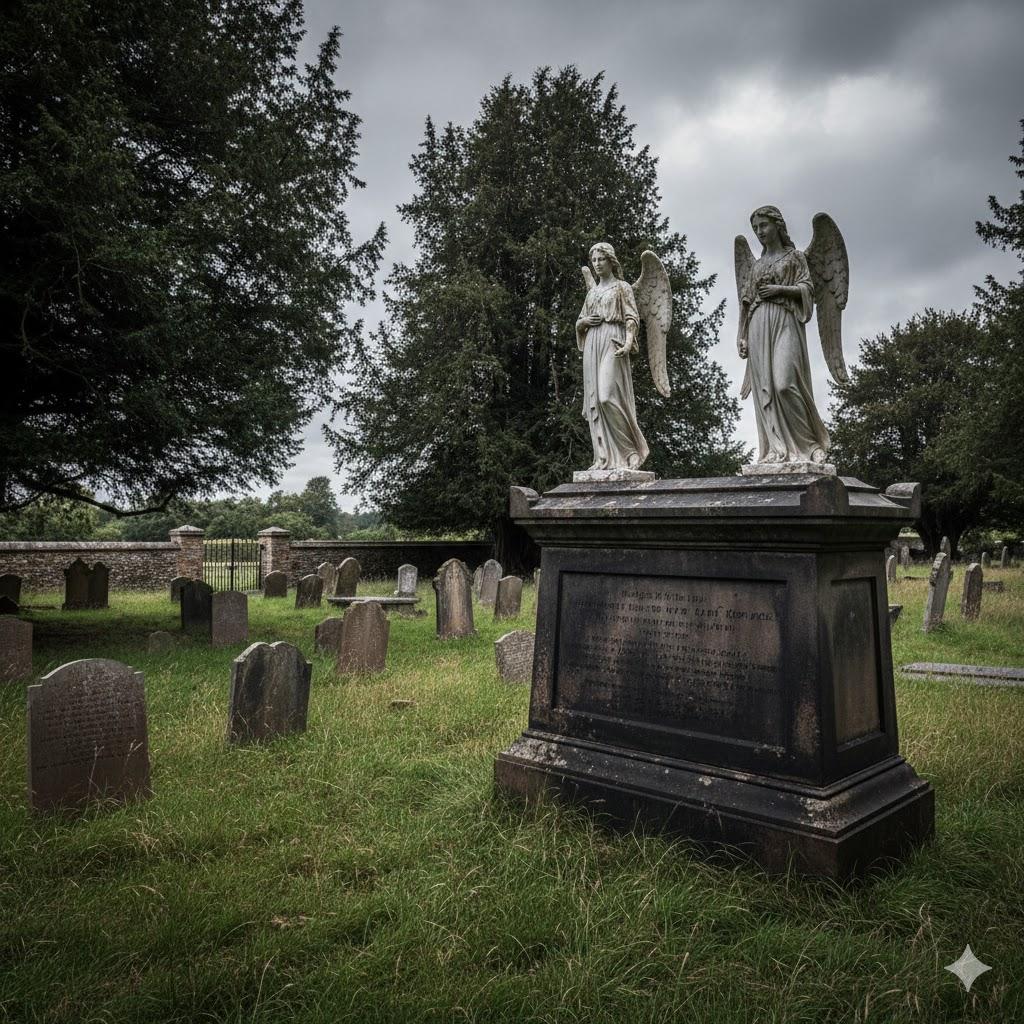
“It wasn’t uncommon, was it?” Patrick leant to touch the top of the stone. Charlotte Jane. “Not just some Victorian gothic invention. Daughter goes slightly off rails, becomes embarrassment, send her away.”
“Even the Queen Mum’s family.” She met his enquiring look. “Some of her cousins. In the 1920s as well.”
“Like Charlotte.” He shook his head. “Only a hundred years ago, that a family would send a child away to an institution for years… for something that wasn’t their fault. Bloody brutal.”
“The Haltons weren’t too unkind.” And she smiled at his look of askance. “No, genuinely. It wasn’t an asylum or a rescue home, it was actually quite a well-respected, licensed home over near Whitby. They ran it much as if it were a country house retreat.”
“Just with bars on the windows and warders on the doors.”
The smile broke to a laugh. “You have been reading too much gothic.” And then died. “But yes, she was a lot luckier than women lower down the scale. A comfortable place, and the evidence I can dig up says they were treated well. Just…” Her eyes dipped to the grave again. “No longer a beloved daughter.”
She felt Patrick’s hand wrap around hers. “But a beloved sister. He brought her home.”
Christ, was that a prick of tears she felt? “Yes.” Yes; in 1929, three years after their parents had died, and the three years it took for Matthew – no, for both of them, Matthew and Charlotte, to navigate doctors and lawyers and have her sign her own release papers, and come home, back to Abbots Stokely, to live a life nearly as secluded as in Whitby, but free. That much, the revised Great Families had told her. To be loved again; that much, instinct had told her.
“And she was the poet.” Patrick’s quiet words broke over her reflection.
Her sigh was gossamer. “I can’t prove it. But look at his work, all light-hearted prose, all fun and frivolity, no mention anywhere of anything poetic. She, on the other hand…” In that first edition of Great Families, the short word descriptions of each of the children, Richard and his horses, Walter and any sport he turned his hand (or foot) to, Michael and his dramatics, Charlotte and her poetry books; and Michael and Charlotte were close, her diggings in The Clarion had told her that. Along with veiled references to his anger when she was sent away, the frequent visits he made to see her, the house he bought that they shared whenever he sojourned from his hectic London whirl, that last Great Families picture. Standing together, her fingers laid against the words.
The one anthology he had published: Words Unbound. 1931. So out of keeping with his style, so simple, so dour, elegiac and bittersweet. So unlike Michael Halton. Complete with the full version of Eyes Closed to Light. The poem that had ensured Michael Halton’s name reached far beyond his village, his shire, his coterie. Had him read at the BBC. Elevated his sales.
Gratitude unbounded by words.
Patrick’s fingers tightened around hers. “But it couldn’t be her.”
“An ‘unruly’ woman stashed out of sight by her own family?” Helena felt the same swell of sadness that had washed her as she’d sat reading Great Families. Come home, but to be a recluse, stigma still clinging. “No. She had to be someone else.”
And so we look,
And look to see,
And see not
Those who live no longer,
Yet still endure.
Their eyes closed to light,
Yet hold all sight:
All that surrounds us,
All that we are.
We, who yet may be,
Only because they may not.
And did they feel?
And did they fear?
Alone, cast out, abandoned
Shamed.
We, who are as they are not,
Alone, cast out, abandoned
Shamed.
And so we look,
And look to see,
To see:
Their eyes closed to light.
Holding all sight.
“And you don’t.”
She breathed, deep, measured, serene, the drift of scent from the roses she’d placed on Charlotte’s neat-mown grave all the stronger in the damp air, and turned to him, fingers still laced in his. “No. I know. Helena Mary Baines, free to be madam polished career woman and madcap writer.”
His gruff chuckle again, sweet in her ears, sweet as the heart-melt of a smile that followed it. “You can be whatever you want to be, Ms Baines, you are precious to me whatever. I just know that words give you too much to turn your back. They’re as much a reality as we are. And just as good a ride.” He leaned close to kiss her lips lightly. “Be them, Helena. Write, Publish. Be who you are and take anyone who’ll follow with you.”
To our dear friend, Helena,
We tracked this down for you, and we hope this book is what you wanted. We think you’re looking for something, but we couldn’t see what it might be.
We hope it might give you a reason to come back here? All of us in Bishops Norland would love to hear from you again.
The village ticks over without you, but it doesn’t move. We’ve lost our purpose. We’ve lost our stories, and our joy. It’s you who gives us that, Helena. We hope that in some way we give purpose and joy to you as well.
We miss you.
From all of Bishops Norland.
She linked her arm in his and smiled. “They don’t follow me, Patrick, they walk right beside me.”
Libby’s eyes snagged his. A perfect moment; softest birdsong; gentlest breeze catching voices and laughter and, somewhere, a song; a graze of sun, the ambrosia scent of rose. And Alex leaning close to kiss her lips lightly. “I think we all have.”